


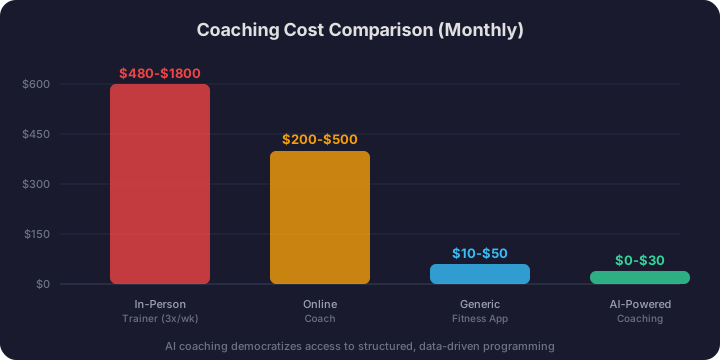
The fitness industry has a scaling problem. Good coaching is expensive. A competent personal trainer costs $60-150 per session. An experienced online coach charges $200-500 per month. For most people, consistent access to quality coaching is financially out of reach.
At the same time, the information problem has inverted. Twenty years ago, the challenge was finding good training information. Today, the challenge is filtering the mountain of conflicting advice into something actionable. Social media has given everyone a platform, but it hasn't given everyone expertise.
AI is starting to address both problems — but it's important to be honest about what it can and can't do.
What AI Coaching Does Well
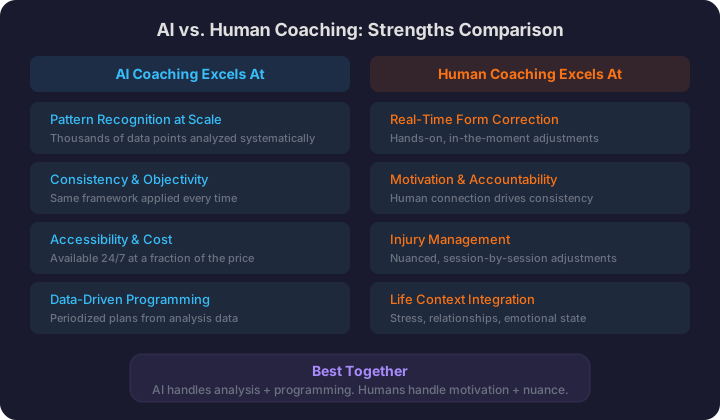
1. Pattern Recognition at Scale AI can analyze thousands of physique photos and identify patterns that would take a human coach years to develop intuition for. Muscle development ratios, body fat distribution patterns, proportional imbalances — AI processes these systematically rather than relying on subjective visual assessment.
This is HyperBody's core strength. The photo analysis system evaluates your physique across multiple dimensions simultaneously: body fat estimation, muscle distribution, symmetry, proportions, and weak point identification. A human coach might catch the obvious things, but systematic analysis catches the subtle imbalances that experienced eyes might miss.
2. Consistency and Objectivity Human coaches have biases. They might favor certain training styles, overlook familiar weaknesses, or have off days where their assessments are less sharp. AI applies the same analytical framework every time.
This is particularly valuable for progress tracking. When you re-analyze monthly, the same criteria are applied. A human coach's subjective impression might shift based on mood, lighting in the photo, or what they had for lunch. AI doesn't have these variables.
3. Accessibility and Cost A single session with a top-level physique coach might cost more than a year of AI-powered analysis. AI democratizes access to structured coaching that was previously reserved for competitive athletes and wealthy clients.
4. Program Generation Based on Data AI excels at translating analysis data into structured training programs. Given your weak points, training experience, available equipment, and goals, it can generate a periodized program with appropriate exercise selection, volume, and progression — tasks that require significant coaching knowledge to do manually.
5. Always Available You can analyze your physique at 2 AM on a Sunday. You can generate a new training program when your schedule changes. You don't need to wait for your coach's next available slot.
What AI Can't Replace
1. Real-Time Form Correction While AI video analysis (like HyperBody's form analysis feature) can identify common form issues, it can't match a skilled coach standing next to you, watching your movement patterns, and making real-time adjustments.
A coach sees things a camera might miss: how your weight shifts during a squat, subtle knee tracking issues, whether you're bracing properly. Video analysis is getting better, but it's still post-hoc rather than real-time.
2. Motivational Coaching and Accountability An AI can tell you what to do. It can't look you in the eye and tell you that you're selling yourself short. It can't adjust its communication style based on whether you need encouragement or a push. It can't text you when you've missed three sessions.
Human connection matters in coaching. The relationship between coach and client is a powerful motivational tool that AI doesn't replicate.
3. Nuanced Injury Management If you have a shoulder impingement, a skilled coach can modify your pressing exercises in real time, observe your pain response, and adjust the plan session by session. AI can flag general contraindications, but it can't replace the nuanced judgment of an experienced coach working with an injured client.
For anything beyond minor discomfort, human oversight (preferably from a physiotherapist or sports medicine professional) is essential.
4. Psychological and Behavioral Coaching Fitness is as much a mental game as a physical one. Disordered eating patterns, body dysmorphia, training addiction, fear of certain exercises — these are real issues that require human empathy and expertise to address.
AI shouldn't be and isn't a substitute for the psychological dimensions of coaching.
5. Context That Data Can't Capture "I just went through a breakup." "Work has been brutal this month." "I'm training for my daughter's wedding." A human coach integrates this context into their programming decisions. AI works with the data it's given — and life context is hard to quantify.
Where AI and Human Coaching Complement Each Other
The most interesting space isn't AI vs. human coaching — it's AI and human coaching working together.
AI handles the analytical heavy lifting:
- Systematic physique assessment
- Data-driven exercise selection
- Structured program generation with appropriate periodization
- Consistent progress tracking with objective metrics
Human coaches handle the human elements:
- Motivation and accountability
- Real-time form correction
- Injury management and exercise modification
- Psychological support and behavioral change
- Life context integration
A human coach augmented by AI tools can serve more clients at a higher level. The AI handles the time-consuming analytical work; the coach focuses on the irreplaceable human elements.
The Current State of AI Fitness
Let's be realistic about where we are:
What works today:
- Photo-based physique analysis with reasonable accuracy
- Structured program generation based on user data
- Video form analysis for common exercises
- Macro calculation and recipe generation
- Progress tracking and trend visualization
What's improving rapidly:
- Movement quality assessment from video
- Real-time rep counting and form feedback
- Natural language coaching interactions
- Integration of wearable data (sleep, HRV, step count) into programming decisions
What's still limited:
- Understanding complex injury presentations
- Replicating the motivational impact of a human relationship
- Handling edge cases and unusual situations
- Integrating subjective life context into training decisions
The HyperBody Approach
HyperBody is designed as an AI-powered coaching tool, not an AI replacement for coaching. The philosophy is:
Do what AI does well:
- Systematic, objective physique analysis
- Data-driven program design with proper periodization
- Consistent progress tracking across multiple metrics
- Smart exercise selection based on your specific body
Be transparent about limitations:
- The analysis provides estimates, not medical-grade measurements
- The programs are starting points that should be adjusted based on how your body responds
- For injuries, always consult a qualified professional
- Human coaching and AI coaching are complementary, not competitive
What This Means for You
If you're deciding between AI coaching and human coaching, consider your situation:
AI coaching is great if you:
- Are self-motivated and consistent
- Want structured, data-driven programming
- Need affordable access to analysis and coaching
- Prefer flexibility and on-demand access
- Are injury-free and have a reasonable training base
Human coaching is better if you:
- Need accountability and external motivation
- Have injuries or limitations requiring hands-on management
- Are a complete beginner who needs real-time guidance
- Benefit from the relationship and emotional support of a coach
- Can afford the investment
Both together is ideal if you:
- Want the best of both worlds
- Use AI for analysis and programming, human coaching for form and motivation
- Work with a coach who leverages AI tools to enhance their service
The fitness industry is changing. AI won't replace great coaches — but it will make quality coaching principles accessible to millions of people who currently have no coaching at all. That's a net positive for everyone.