


"I want to get to 10% body fat." It's one of the most common fitness goals — and one of the most misunderstood. Most people have no idea what 10% body fat actually looks like, how it feels to maintain, or whether it's even a reasonable target for them.
Body fat percentage is arguably the most important number in physique development. But without visual context, it's just an abstract number. This guide gives you that context — what each body fat range actually looks like, what it takes to get there, and what it feels like to live at that level.
How Body Fat Is Distributed
Before we get into specific percentages, it's important to understand that body fat isn't distributed uniformly. Where you store fat is largely genetic, and it affects how you look at any given percentage.
Common male fat storage patterns:
- Abdomen and lower back (most common)
- Love handles
- Chest
- Lower body (less common in males)
Common female fat storage patterns:
- Hips and thighs (most common)
- Lower abdomen
- Upper arms
- Chest
This means two people at the same body fat percentage can look very different. Someone who stores fat primarily in their lower body might have visible abs at 18%, while someone who stores it in their abdomen might need to reach 14% for the same look.
Male Body Fat Ranges
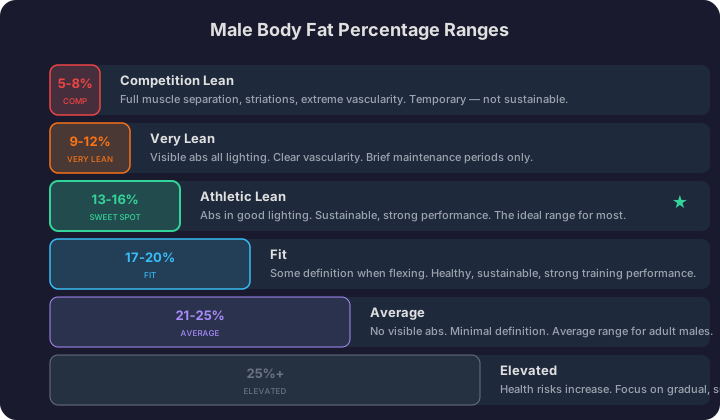
5-8% — Competition Lean This is bodybuilding stage condition. Extremely vascular, full muscle separation, striated glutes. Every muscle fiber is visible. This level is temporary — it's achieved for a competition or photoshoot and cannot be healthily maintained.
At this level, you'll experience constant hunger, poor sleep, reduced libido, brain fog, and general misery. It looks incredible under stage lighting. It feels terrible.
9-12% — Very Lean Visible abs in all lighting. Clear vascularity in arms and shoulders. Muscle separation is obvious. Face looks angular and defined.
This is maintainable for some people, but it requires consistent attention to diet. Most natural lifters will spend brief periods here rather than living at this level year-round. You'll look "shredded" to most people.
13-16% — Athletic Lean Abs visible in good lighting, especially the upper abs. Some vascularity. Muscles look defined but not striated. Face has a healthy, lean look without being gaunt.
This is the sweet spot for most men who want to look fit. It's sustainable, allows for good gym performance, and still looks impressive in a t-shirt. Many fitness influencers live in this range.
17-20% — Fit Abs are partially visible or visible only when flexing. Some muscle definition in arms and shoulders. Slight softness around the midsection. Clothes fit well.
Most men who train consistently and eat reasonably sit in this range. It's healthy, sustainable, and allows for strong gym performance. You look like someone who works out.
21-25% — Average No visible abs. Softness around the midsection, face, and arms. Muscle definition is minimal. This is the average body fat range for adult males in developed countries.
25%+ — Elevated Noticeable fat accumulation around the abdomen, chest, and face. Health risks begin to increase. If you're in this range, a gradual fat loss approach focused on building healthy habits will serve you better than an aggressive cut.
Female Body Fat Ranges
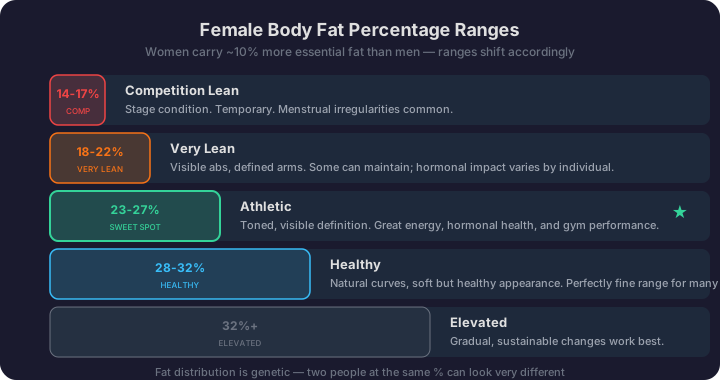
Women naturally carry more essential fat than men (around 10-13% vs 3-5% for men). This means the ranges shift accordingly.
14-17% — Competition Lean Very low for women. Clear muscle separation, visible abs, significant vascularity. Like the male equivalent, this is stage condition — temporary and not sustainably healthy. Menstrual irregularities are common at this level.
18-22% — Very Lean Visible abs, defined arms and legs. Athletic and lean appearance. Some women can maintain this level comfortably; others will experience hormonal disruption. It depends heavily on the individual.
23-27% — Athletic Toned appearance with visible muscle definition. Slight softness in the hips and thighs (which is normal and healthy). Abs may be visible with good lighting or when flexing.
This is the sweet spot for most women who want to look fit and feel good. Hormonal health is typically well-maintained, energy is good, and gym performance is strong.
28-32% — Healthy Soft but not overweight. Curves are natural and proportional. Muscle definition is minimal but the physique looks healthy and normal. This is a perfectly fine and healthy range for many women.
32%+ — Elevated Similar to the male equivalent — gradual, sustainable changes are more effective than extreme approaches.
Why Estimates Are Tricky
Here's the uncomfortable truth: accurately measuring body fat percentage is difficult. Every method has limitations:
- Visual estimates are subjective and biased by lighting, pump, and fat distribution
- Calipers depend on the measurer's skill
- BIA scales are wildly inconsistent
- DEXA is accurate but expensive and impractical for frequent use
This is why trends matter more than absolute numbers. If your analysis says you're at 18% and three months later it says 15%, the direction is more informative than whether you're really at exactly 15%.
HyperBody's photo-based analysis provides consistent estimates under standardized conditions. The value isn't in the exact number — it's in tracking how that number changes over time with the same methodology.
Setting Realistic Targets
Based on the ranges above, here's how to set a body fat target that makes sense:
If you've never been lean before: Aim for the "Athletic" range first. Don't target competition leanness — it requires an extreme approach that isn't sustainable for beginners.
If you're already in the athletic range: You can push into "Very Lean" territory for short periods. Plan it around a specific goal (vacation, photoshoot, personal milestone) and have a reverse diet plan for afterward.
If your goal is long-term health and aesthetics: The athletic range is your best bet. It looks good, feels good, and supports strong training performance.
Rate of fat loss: Aim for 0.5-1% of body weight per week. Faster than that, and you'll lose muscle along with the fat. For a 180 lb person, that's roughly 1-1.8 lbs per week.
The Takeaway
Body fat percentage is a useful metric, but it's not the only one that matters. Two people at 15% body fat with different amounts of muscle mass will look completely different. The person with more muscle will look leaner, more defined, and more athletic — even at the same body fat percentage.
The real formula for a great physique isn't just "get lean." It's: build muscle in the right places + reduce body fat to an appropriate level + do it sustainably. That's what makes body composition analysis so valuable — it tracks all three dimensions, not just one number.
Don't chase a specific percentage for its own sake. Chase the physique you want, use body fat as one metric among many to track your progress, and adjust your approach based on how you look, feel, and perform.