


You've been training consistently for three months. The scale hasn't moved. Your mirror selfie looks the same as last week. So you start questioning everything — your program, your diet, your genetics.
But here's the thing: you might actually be making excellent progress. You just can't see it because you're using the wrong tools to measure it.
Progress tracking is one of the most underrated skills in fitness. Do it well, and you'll have the data and confidence to stay the course when things feel slow. Do it poorly, and you'll second-guess every decision and jump between programs every few weeks.
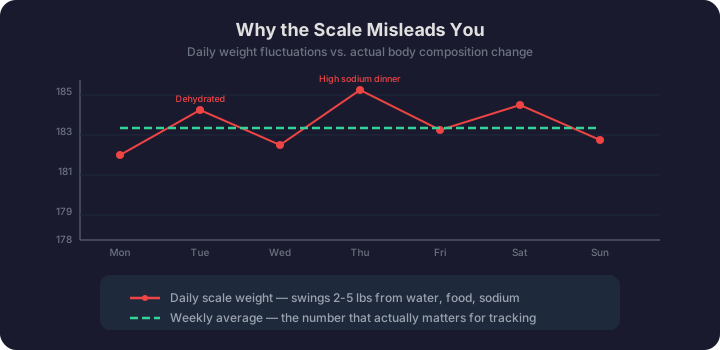
Why the Scale Misleads You
The scale measures one thing: your total body weight. That's the sum of your muscle, fat, bones, organs, water, food in your gut, and everything else.
Here's why that single number is almost useless for physique tracking:
- Water retention can swing your weight 2-5 lbs day to day
- Muscle gain and fat loss can happen simultaneously, leaving the scale unchanged while your body transforms
- Meal timing — eating a large dinner the night before can add 1-3 lbs the next morning
- Sodium intake directly affects water retention
- Menstrual cycles cause predictable weight fluctuations of 2-6 lbs
A person who gains 5 lbs of muscle and loses 5 lbs of fat has made dramatic progress — but the scale reads exactly the same. If the scale is your only feedback tool, you'd think nothing happened.
The Progress Tracking Stack
Effective progress tracking uses multiple data points that together tell the real story. Think of it as a stack — each layer adds context that the others miss.
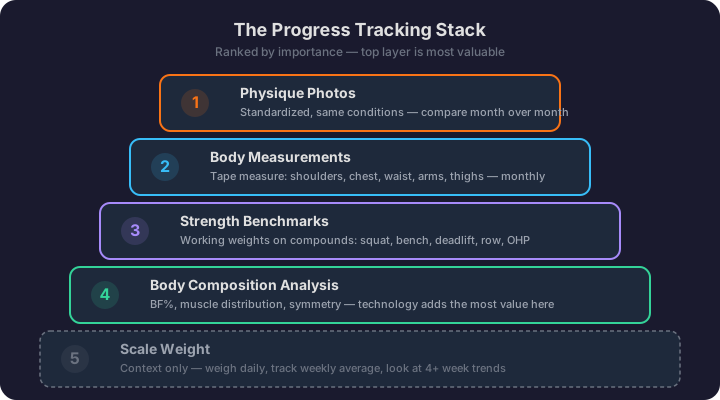
1. Physique Photos (Most Important) Standardized photos taken under consistent conditions are the single best way to track visual progress. The key word is "standardized":
- Same lighting (natural or bright, even artificial light)
- Same time of day (morning, fasted, after using the bathroom)
- Same poses every time (front relaxed, front flexed, back relaxed, back flexed, side profile)
- Same distance from the camera
- Same clothing (or as close to it as possible)
Take a full set every 2-4 weeks. Don't look at them day-to-day — compare month over month. The changes that are invisible week to week become obvious when you compare photos 8-12 weeks apart.
2. Body Measurements A tape measure doesn't lie and doesn't fluctuate with water retention (much). Track these key measurements monthly:
- Shoulders (widest point)
- Chest (at nipple line)
- Waist (at navel)
- Hips (widest point)
- Arms (flexed, at peak)
- Thighs (at widest point)
The ratios matter as much as the raw numbers. A growing shoulder measurement with a shrinking waist tells a clear story of physique improvement — even if your weight hasn't changed.
3. Strength Benchmarks If you're getting stronger, you're likely building muscle. Track your working weights on key compound movements:
- Squat or leg press
- Bench press or dumbbell press
- Deadlift or Romanian deadlift
- Overhead press
- Barbell or dumbbell row
Log every session. When your squat goes from 135x8 to 185x8 over six months, that's objective, undeniable progress — regardless of what the scale says.
4. Body Composition Analysis This is where technology adds the most value. Regular body composition analysis gives you estimated body fat percentage, muscle distribution scores, and proportion assessments that no mirror or scale can provide.
HyperBody's photo-based analysis lets you track these metrics monthly from home. Upload your five standard poses and receive a detailed breakdown of what's changed — which muscles have grown, whether your body fat has shifted, and how your proportions are evolving.
5. Scale Weight (As Context Only) The scale still has a place — just not as your primary metric. Use it as one data point among many:
- Weigh daily, first thing in the morning
- Track the weekly average, not individual days
- Look at the trend over 4+ weeks, not week to week
- Use it alongside photos and measurements, never alone
Common Progress Tracking Mistakes
Checking Too Often Daily mirror checks and weekly photo comparisons will drive you crazy. Your body doesn't change fast enough to see differences at those intervals. Monthly comparisons are the sweet spot.
Inconsistent Conditions A photo taken in the morning with good lighting looks completely different from one taken at night after a meal with overhead lighting. If your conditions aren't consistent, your comparisons are meaningless.
Only Tracking What You Want to See It's tempting to only measure your arms if arms are growing, and ignore your legs if they're lagging. Track everything — the lagging areas are where you need the most information.
Not Taking Starting Photos The biggest regret in fitness: not having good starting photos. Take a full set of standardized photos before you begin any program. Future you will thank present you.
Comparing to Others Your progress photos should only ever be compared to your previous photos. Different genetics, training histories, and starting points make inter-person comparisons meaningless and demoralizing.
Building Your System
Here's a practical progress tracking protocol you can implement today:
Daily: Weigh yourself in the morning. Log it. Don't react to it.
Every Session: Log your working weights, reps, and sets. Note anything unusual (poor sleep, stress, missed meals).
Monthly: Take a full set of standardized physique photos. Take body measurements. Run a body composition analysis through HyperBody.
Quarterly: Compare your monthly photos side by side. Review your strength trends. Assess whether your program needs adjustment.
The goal is to create a feedback loop: track, analyze, adjust, repeat. Each cycle gives you better data, which leads to better decisions, which leads to better results.
Progress in fitness is rarely linear and almost never as fast as you want it to be. But with the right tracking system, you'll always know whether you're heading in the right direction — and that knowledge is worth more than any number on a scale.