


You can train perfectly and still see mediocre results if your nutrition isn't supporting your goals. Training creates the stimulus for your body to change; nutrition provides the raw materials to actually make that change happen. Get one wrong, and the other can't fully deliver.
This guide covers the practical side of nutrition for body recomposition — the process of losing fat and building (or preserving) muscle simultaneously. No fads, no extremes — just the fundamentals that work.
Calories: The Foundation
Everything starts with energy balance — the relationship between how many calories you consume and how many you burn.
- Caloric deficit = you lose weight (ideally fat)
- Caloric surplus = you gain weight (ideally muscle)
- Maintenance = weight stays stable
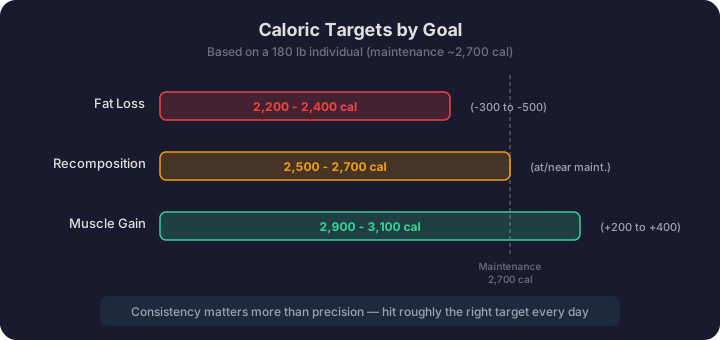
To estimate your needs, multiply your body weight in pounds by 14-16 for a rough maintenance estimate. More active individuals trend toward the higher end; less active toward the lower.
From there:
- Fat loss: Subtract 300-500 calories from maintenance
- Muscle gain: Add 200-400 calories above maintenance
- Recomposition (simultaneous fat loss and muscle gain): Eat at or slightly below maintenance with high protein
Here's what matters more than precision: consistency. Hitting roughly the right calorie target every day beats hitting the perfect number three days a week and going off the rails the other four. Don't let the perfect be the enemy of the good.
Macros for Your Goal
Once calories are set, how you distribute them across protein, carbohydrates, and fats shapes your results.
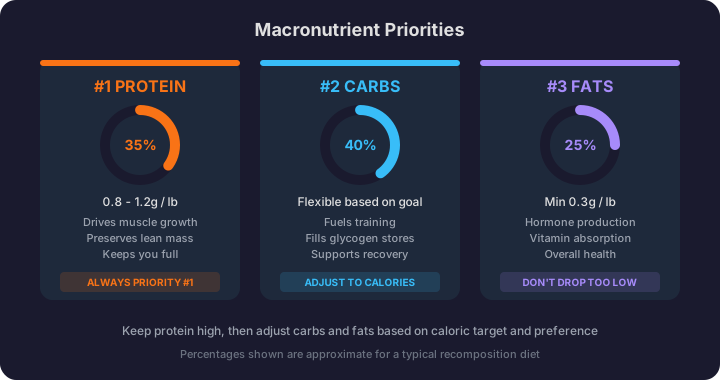
Protein is the priority regardless of your goal. It drives muscle protein synthesis, preserves lean mass during a cut, and keeps you full. Aim for 0.8-1.2g per pound of body weight daily.
Carbohydrates fuel your training. They fill muscle glycogen stores, support performance, and aid recovery. Higher carb intakes generally support better training quality — especially for intense resistance training.
Fats are essential for hormone production, vitamin absorption, and overall health. Don't drop them too low. A minimum of 0.3g per pound of body weight is a good floor.
The short version is: keep protein high, adjust carbs and fats based on your caloric target and personal preference.
Meal Timing: Does It Matter?
The short answer: less than you think, but more than "not at all."
What matters most:
- Total daily intake (calories and macros) trumps timing
- Eating protein across 3-5 meals per day is slightly better than cramming it all into one or two meals
- Having some protein and carbs within a few hours of training supports recovery
What matters less:
- The "anabolic window" — you don't need to chug a shake within 30 seconds of your last set. A meal within 1-2 hours post-workout is fine
- Eating after 8pm — your body doesn't suddenly store food as fat after a certain hour
- Meal frequency — 3 meals or 6 meals, as long as your daily totals are hit, the difference is marginal
Practical guidelines:
- Eat a balanced meal 1-3 hours before training for energy
- Have a protein-rich meal within 1-2 hours after training for recovery
- Spread protein intake relatively evenly across your meals
- Time your largest carb meals around your training if possible
Don't overcomplicate this. Get the big rocks right (total calories, total protein) and the small details will take care of themselves.
The Recipe Problem
Here's where most nutrition plans fall apart in practice: boredom.
You can have the perfect macro targets, the ideal meal timing, the right calorie balance — and still fail because you're eating the same four meals on repeat until you can't stand them anymore. Then you "take a break" from the diet, which turns into a week, which turns into a month.
Dietary adherence is the single biggest predictor of nutritional success. And adherence requires variety.
But variety is hard. Finding new recipes that fit your macros, taste good, and don't require a culinary degree takes time most people don't have. Meal prep already eats into your weekend — adding recipe research on top makes it feel like a second job.
This is a problem worth solving, because the best nutrition plan is the one you actually follow.
How HyperBody Helps With Nutrition
HyperBody addresses the nutrition side of your fitness journey with tools designed to make eating well practical, not just theoretical:
Goal-Based Macro Calculations Your macro targets are set based on your specific body composition and goals — not a generic formula. As your body changes through training and re-analysis, your targets adjust accordingly.
Smart Recipe Generation Tell HyperBody what you want to eat, and it generates recipes tailored to your macro targets. Need a high-protein breakfast under 500 calories? A post-workout meal with specific carb targets? The recipes match your nutritional needs, so you don't have to do the math yourself.
Meal Timing Matched to Training Your nutrition guidance takes your training schedule into account, helping you time meals and macros around your workouts for optimal performance and recovery.
The goal isn't to make nutrition complicated — it's to remove the friction so you can focus on eating well consistently.
Building Sustainable Habits
Sustainable nutrition isn't about willpower. It's about systems. Here's how to build habits that last:
Start Simple Don't overhaul your entire diet on day one. Start with one change — like hitting your protein target — and nail it for two weeks before adding the next thing.
Focus on Protein First If you can only track one macro, make it protein. Adequate protein intake drives muscle growth, preserves lean mass, and naturally regulates appetite. Get this right and everything else gets easier.
Prep in Batches Cook proteins and carb sources in bulk on one or two days per week. Having ready-to-eat food in the fridge removes the decision fatigue that leads to poor choices.
Allow Flexibility Rigid diets breed resentment. Build in room for meals out, treats, and social eating. The 80/20 rule works: 80% of your intake from whole, nutrient-dense foods; 20% from whatever you enjoy.
Adjust as Your Body Changes The nutrition plan that works at 200 lbs and 20% body fat won't be right at 185 lbs and 14% body fat. Re-assess your intake every 4-6 weeks and adjust based on progress.
Common Nutrition Mistakes
Eating Too Little Protein This is the most common mistake by far. Most people underestimate how much protein they need and overestimate how much they're eating. Track it for a week — the gap is usually eye-opening.
Cutting Calories Too Aggressively A 1,000-calorie deficit might seem like it'll get you lean faster, but it tanks your performance, mood, and muscle mass. A moderate deficit (300-500 calories) preserves muscle and is far more sustainable.
Ignoring Food Quality Macros matter, but so does food quality. A diet of protein bars and fast food technically hits your macros but leaves you feeling terrible. Prioritize whole foods — meats, fish, eggs, vegetables, fruits, whole grains, and healthy fats.
Not Adjusting as Your Body Changes Your body adapts. As you lose fat or gain muscle, your caloric needs shift. If you've been eating the same calories for six months while your body has changed significantly, it's time to recalculate.
Overthinking It Analysis paralysis is real. You don't need the perfect diet. You need a good diet that you follow consistently. Start with the basics — adequate calories, high protein, mostly whole foods — and refine from there.
Training and nutrition aren't separate pursuits — they're two halves of the same equation. Get them working together, and your results will reflect the synergy. The body you're building in the gym is assembled in the kitchen.