


The fitness industry loves a dramatic transformation. Lose 20 pounds in 8 weeks. Shred for summer in 30 days. Drop two weight classes before your meet. And while aggressive calorie cuts do produce fast results on the scale, they come at a cost most people don't fully understand until it's too late: a significantly slower metabolism that fights you every step of the way — and keeps fighting long after the diet ends.
If you've ever dieted hard, lost weight, then regained it all (and more) despite eating less than before, you've experienced this firsthand. It's not a lack of willpower. It's biology.
How Your Metabolism Actually Works
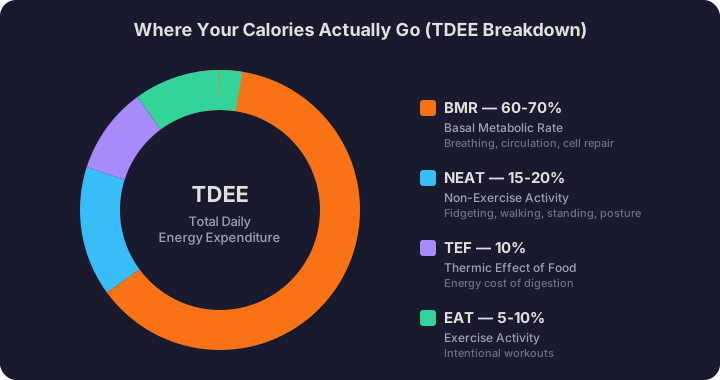
Your metabolism — more precisely, your Total Daily Energy Expenditure (TDEE) — is made up of four components:
- Basal Metabolic Rate (BMR) — the calories your body burns at complete rest to keep you alive (breathing, circulation, cell repair). This accounts for 60-70% of your total burn.
- Thermic Effect of Food (TEF) — the energy cost of digesting and processing what you eat. About 10% of total intake.
- Non-Exercise Activity Thermogenesis (NEAT) — all the movement you do that isn't intentional exercise: fidgeting, walking, standing, gesturing, even maintaining posture. This is the most variable component and can range from 200 to 900+ calories per day.
- Exercise Activity Thermogenesis (EAT) — intentional exercise. Despite what most people assume, this is usually the smallest component, typically 5-10% of TDEE.
When you cut calories aggressively, every single one of these components decreases. Not just a little — substantially.
Metabolic Adaptation: Your Body's Survival Response
Your body doesn't know you're trying to get abs. It thinks you're starving. And it has millions of years of evolutionary programming dedicated to one thing: keeping you alive when food is scarce.
When you create a large calorie deficit, your body initiates a cascade of adaptations:
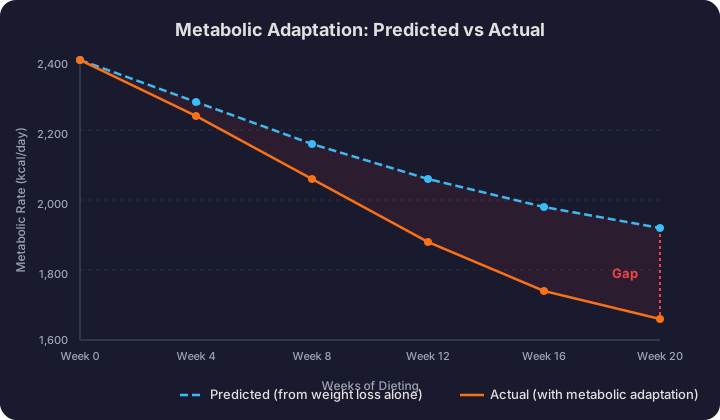
BMR drops beyond what weight loss alone explains. If you lose 10 kg of body mass, yes, your BMR will decrease because there's less tissue to maintain. But research consistently shows BMR drops by more than the predicted amount — sometimes 15-20% more. This is called adaptive thermogenesis, and it's your body actively downregulating metabolic processes to conserve energy.
NEAT plummets without you noticing. This is the silent killer of diets. You unconsciously move less. You fidget less, take fewer steps, sit more, use less energy in your daily movements. Studies have shown NEAT can drop by 500+ calories per day during aggressive diets — and you won't feel it happening.
Hormones shift against you. Leptin (the satiety hormone) drops, making you hungrier. Ghrelin (the hunger hormone) increases, making cravings worse. Thyroid hormones decrease, directly slowing metabolic rate. Cortisol rises, promoting fat storage and water retention. Testosterone drops in men, impairing muscle retention.
TEF decreases. You're eating less food, so there's less to digest. Simple, but it adds up.
The result: the deficit you calculated on paper is much smaller than the deficit you're actually experiencing. And your body is burning fewer calories than it "should" be at your new weight.
The Vicious Cycle: Why More Weight Loss Makes It Worse
Here's where it gets really problematic. Metabolic adaptation isn't linear — it's progressive. The leaner you get and the longer you diet, the more aggressive the adaptation becomes.
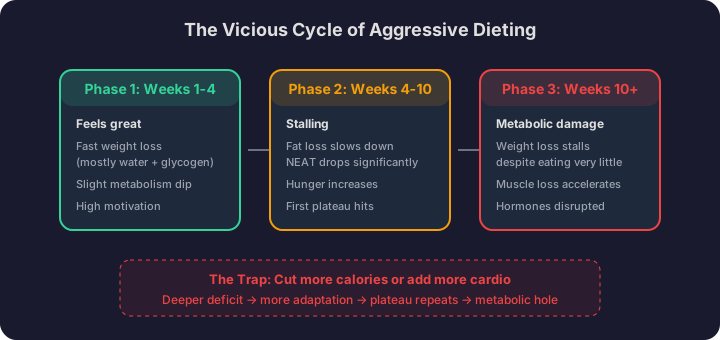
Phase 1 — Early diet (weeks 1-4): Weight drops quickly, mostly water and glycogen. Metabolism dips slightly. You feel great, motivated by the scale.
Phase 2 — Mid-diet (weeks 4-10): Fat loss slows. NEAT has already dropped significantly. Hunger increases noticeably. Sleep quality may decline. You hit your first real plateau.
Phase 3 — Extended deficit (weeks 10+): Metabolic adaptation is in full effect. Weight loss stalls despite eating very little. Energy is low. Training performance suffers. Muscle loss accelerates because your body starts prioritizing energy conservation over muscle maintenance.
Most people respond to each plateau by cutting calories further or adding more cardio. This creates a deeper deficit, which triggers even more adaptation. You end up eating 1,200 calories, doing an hour of cardio daily, and wondering why the scale won't move. You've essentially trained your body to survive on very little.
The Research: This Isn't Theoretical
The most famous study on metabolic adaptation comes from The Biggest Loser research. Contestants who lost massive amounts of weight through extreme dieting had metabolic rates that were 500+ calories per day lower than expected for their new body size — and this suppression was still present six years later. Many contestants regained most or all of the weight despite continuing to eat less than they did before the show.
Other studies show similar patterns. A 2016 study in Obesity found that metabolic adaptation persisted for years after weight loss. A 2021 meta-analysis confirmed that greater caloric restriction leads to greater metabolic adaptation, independent of how much weight was lost.
The takeaway: crash diets don't just slow your metabolism temporarily. They can alter your metabolic rate for years.
The Sustainable Approach: How to Cut Without Wrecking Your Metabolism
The goal of a smart cut isn't to lose weight as fast as possible. It's to lose fat while preserving muscle and metabolic rate, so you can actually maintain your results.
1. Use a Moderate Deficit
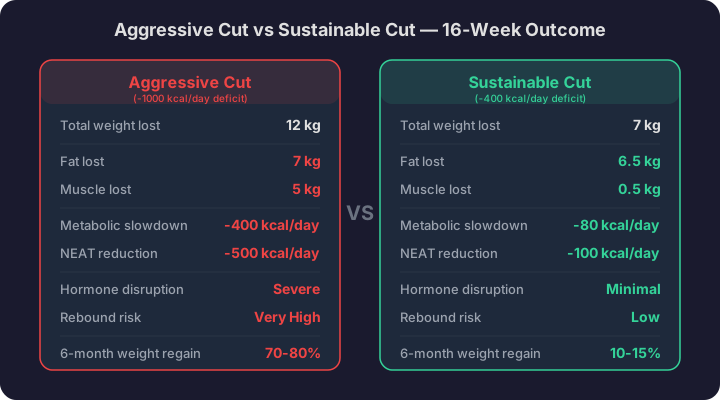
Aim for a deficit of 300-500 calories per day, or roughly 0.5-0.75% of body weight lost per week. For most people, this means losing about 0.3-0.6 kg per week. It's slower, but the composition of what you lose shifts dramatically — more fat, less muscle.
2. Keep Protein High
Protein is your best defense against muscle loss during a cut. Aim for 1.8-2.2 g per kg of body weight. High protein intake also increases TEF (protein costs more energy to digest than carbs or fat) and improves satiety, making the deficit easier to sustain.
3. Prioritize Resistance Training
Your muscles need a reason to stick around. If you stop training hard during a cut, your body has no reason to maintain metabolically expensive muscle tissue. Keep training intensity (weight on the bar) high. You can reduce volume slightly if recovery is impaired, but don't stop lifting heavy.
4. Take Diet Breaks
Every 8-12 weeks of dieting, spend 1-2 weeks eating at maintenance calories. Research shows diet breaks help partially reverse metabolic adaptation, restore hormone levels, replenish glycogen, and improve psychological adherence. You won't lose progress — you're setting yourself up to lose more fat in the next phase.
5. Monitor NEAT
Track your daily step count. If it starts dropping, consciously bring it back up. A daily step target of 8,000-10,000 steps helps counteract the unconscious NEAT decline that sabotages most diets. This alone can preserve 200-400 calories of daily expenditure.
6. Don't Add Excessive Cardio
When weight loss stalls, the instinct is to add more cardio. But excessive cardio compounds metabolic adaptation, increases cortisol, and eats into recovery. If you need to increase energy expenditure, add low-intensity walking (LISS) rather than more HIIT sessions. Better yet, reduce calories slightly instead of adding exercise.
7. Know When to Stop
If your calories are already very low (below ~1,500 for men, ~1,200 for women), your energy is consistently poor, your training is suffering, and your sleep is disrupted — it's time to reverse diet back to maintenance, let your metabolism recover for 2-3 months, then reassess. Pushing through will only dig a deeper metabolic hole.
Reverse Dieting: The Exit Strategy
How you end a diet matters as much as how you run it. If you go from a deficit straight back to your old eating habits, you'll regain weight rapidly because your metabolism is suppressed and your body is primed to store fat.
Instead, reverse diet: increase calories by 100-150 per week until you reach your estimated maintenance. This gradual increase gives your metabolism time to upregulate, minimizing fat regain while restoring energy, hormones, and training performance.
The Bottom Line
Fast cuts produce fast results — and fast rebounds. The metabolic damage from aggressive dieting can persist for years and make every future diet harder. The sustainable approach is slower, less dramatic, and won't get you likes on social media, but it's the one that actually works long-term.
Lose weight at a pace your body can handle. Keep protein high. Keep training hard. Take breaks. And when it's time to stop cutting, reverse out slowly. Your metabolism isn't something to fight against — it's something to work with. Treat it well, and your results will last.