


The warm-up is the most undervalued part of any training session. Most people either skip it entirely ("I'll warm up with my first set") or waste time with an ineffective routine (20 minutes of slow treadmill walking before a squat session).
A proper warm-up takes 8-12 minutes and measurably improves your performance and safety for the session ahead.
Why Warming Up Matters
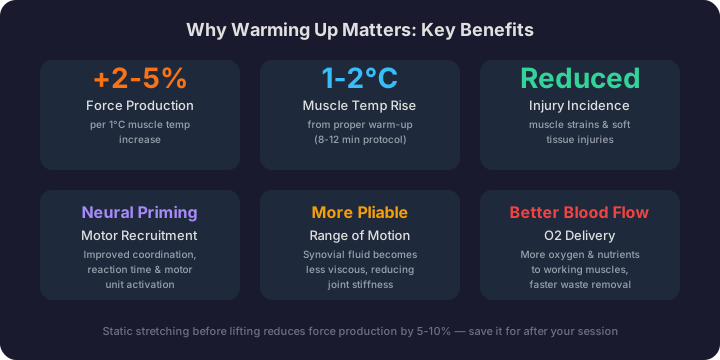
Increased Muscle Temperature Warm muscles contract more forcefully and relax more quickly. Research shows that muscle force production increases by approximately 2-5% per degree Celsius of temperature increase. A proper warm-up raises muscle temperature by 1-2°C.
Improved Blood Flow Warming up gradually increases blood flow to working muscles, delivering more oxygen and nutrients while removing metabolic waste products more efficiently.
Enhanced Range of Motion Warm tissues are more pliable. Joint synovial fluid becomes less viscous (more fluid) with temperature, reducing joint stiffness and improving range of motion at working joints.
Neural Activation A warm-up primes your nervous system for the movements ahead. Motor unit recruitment patterns, coordination, and reaction time all improve after appropriate warm-up activities.
Injury Prevention While no warm-up eliminates injury risk entirely, research consistently shows that warming up reduces the incidence of muscle strains and other soft tissue injuries. Cold muscles are more susceptible to tears.
What Doesn't Work
Static Stretching Before Lifting Holding long stretches (30+ seconds) before resistance training has been shown to temporarily reduce force production by 5-10% and may impair power output. Save static stretching for after your session or on rest days.
Extended Low-Intensity Cardio Walking on a treadmill for 15-20 minutes raises body temperature but does nothing to prepare the specific muscles, joints, and movement patterns you'll use during training. It's not harmful, but it's an inefficient use of your time.
Skipping the Warm-Up "My first set is my warm-up" works fine — until it doesn't. Jumping straight into working weights with cold muscles and joints is the most common setup for acute injuries like muscle strains and joint aggravation.
The Effective Warm-Up Protocol
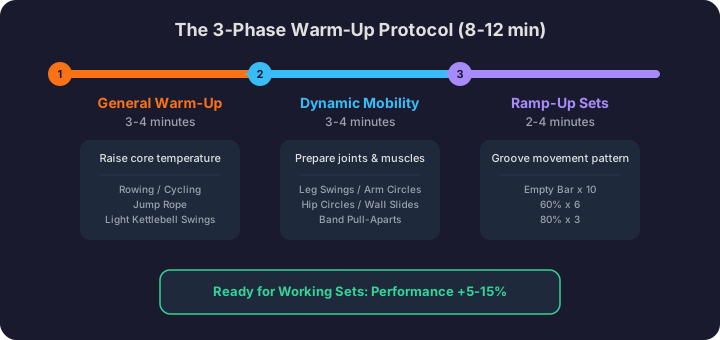
A good warm-up has three phases:
Phase 1: General Warm-Up (3-4 minutes)
The goal is to raise your core and muscle temperature. Choose any low-to-moderate intensity activity:
- Rowing machine (moderate pace)
- Cycling (moderate resistance)
- Jump rope
- Light kettlebell swings
- Brisk walking on an incline
You should feel warm and have a slightly elevated heart rate. You shouldn't be breathing hard or sweating heavily.
Phase 2: Dynamic Mobility (3-4 minutes)
Now target the specific joints and muscles you'll use in your session. Dynamic mobility means moving joints actively through their range of motion — not holding static stretches.
For Upper Body Days:
- Arm circles (forward and backward, 10 each)
- Band pull-aparts (15 reps)
- Wall slides (10 reps)
- Thoracic spine rotations (8 each side)
- Scapular push-ups (10 reps)
For Lower Body Days:
- Bodyweight squats (15 reps)
- Walking lunges (10 total)
- Leg swings (front-to-back and side-to-side, 10 each)
- Hip circles (10 each direction)
- Glute bridges (15 reps)
For Full Body / Push-Pull Days:
- Combine 2-3 exercises from each list based on the movements in your session
Phase 3: Movement-Specific Ramp-Up Sets (2-4 minutes)
Before your first working exercise, perform 2-3 progressively heavier warm-up sets of that specific movement:
Example: Working sets at 100kg Bench Press
- Set 1: Empty bar (20kg) x 10 — focus on movement pattern
- Set 2: 60kg x 6 — moderate speed, feel the groove
- Set 3: 80kg x 3 — controlled, building toward working weight
- Begin working sets at 100kg
Example: Working sets at 120kg Squat
- Set 1: Empty bar x 10
- Set 2: 60kg x 6
- Set 3: 90kg x 4
- Set 4: 110kg x 2
- Begin working sets at 120kg
The heavier your working weight, the more ramp-up sets you need. The goal is to prepare the specific movement pattern, joints, and muscles — not to fatigue yourself before working sets.
Warm-Up for Subsequent Exercises
You don't need a full warm-up for every exercise in your session. After your first exercise, your body is warm and your nervous system is active. For subsequent exercises:
- Same movement pattern (e.g., bench press to incline press): One light ramp-up set is sufficient
- Different movement pattern (e.g., bench press to barbell row): One or two ramp-up sets to groove the new pattern
- Isolation work (e.g., curls after rows): Usually no warm-up needed — your muscles and joints are already warm from the compound work
Common Warm-Up Mistakes
Too much volume. Your warm-up should prepare you, not tire you. If your warm-up sets leave you fatigued before working sets, you're doing too many reps or too many sets.
Warming up muscles you won't use. On bench press day, you don't need to warm up your legs extensively. Be specific to the session.
Rushing through ramp-up sets. Each warm-up set should be controlled with good form. Don't just throw the weight around to "get it done."
The Bottom Line
A proper warm-up is an 8-12 minute investment that pays dividends in performance, safety, and training quality. General warm-up to raise temperature, dynamic mobility to prepare joints and muscles, and ramp-up sets to groove the movement pattern. Simple, effective, non-negotiable.