


Training breaks muscle down. Nutrition provides the raw materials. But sleep is where the actual rebuilding happens. If you're optimizing your workouts and diet while neglecting sleep, you're undermining the very process that makes those efforts pay off.
This isn't motivational fluff — it's physiology.
What Happens During Sleep
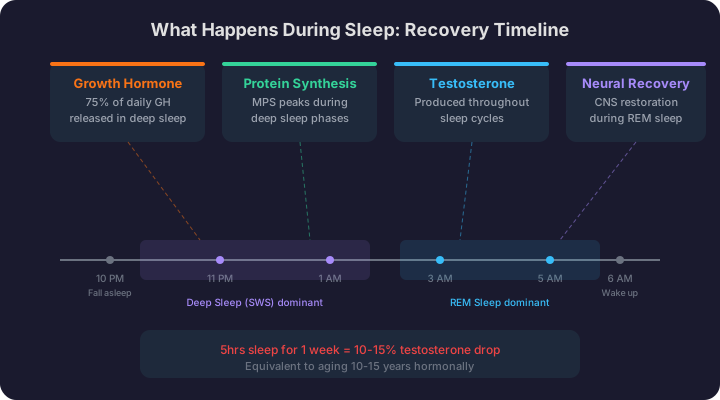
Sleep is when your body shifts from "activity mode" to "repair mode." Several critical processes accelerate during sleep that directly affect muscle growth and recovery:
Growth Hormone Release The majority of your daily growth hormone (GH) output — up to 75% — occurs during deep sleep (slow-wave sleep). Growth hormone stimulates protein synthesis, promotes fat metabolism, and supports tissue repair. Poor sleep directly reduces GH secretion.
Protein Synthesis Muscle protein synthesis (MPS) continues during sleep, provided adequate amino acids are available. Sleep deprivation has been shown to reduce MPS rates and shift the body toward a more catabolic state.
Testosterone Production Testosterone — critical for muscle growth in both men and women — is primarily produced during sleep. Studies show that restricting sleep to 5 hours per night for one week reduces testosterone levels by 10-15%. That's the hormonal equivalent of aging 10-15 years.
Cortisol Regulation Cortisol, the primary stress hormone, follows a circadian rhythm — it should be lowest at night during sleep. Chronic sleep deprivation keeps cortisol elevated, which promotes muscle breakdown and fat storage, particularly around the midsection.
Neural Recovery Your nervous system recovers during sleep. Strength is as much a neural phenomenon as a muscular one — your ability to recruit motor units, coordinate movement patterns, and generate force all depend on a recovered nervous system.
The Research on Sleep and Muscle
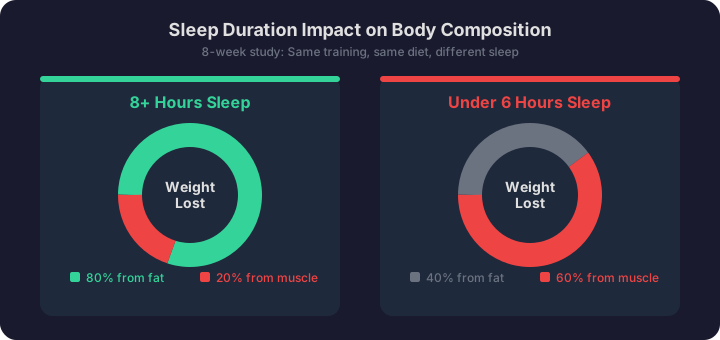
A 2018 study published in Sleep Medicine followed two groups of resistance-trained individuals over 8 weeks. Both groups followed the same training program and diet. The only difference was sleep: one group averaged 8+ hours, the other averaged under 6 hours.
The results:
- The well-rested group gained significantly more lean mass
- The sleep-deprived group lost more fat-free mass
- Strength gains were markedly higher in the well-rested group
- Perceived effort during training was higher in the sleep-deprived group (same weight felt harder)
Another study from the University of Chicago found that sleep restriction during a caloric deficit caused 60% of weight loss to come from lean mass rather than fat — compared to 20% lean mass loss in the adequate sleep group. Sleep deprivation literally makes your body preferentially burn muscle instead of fat.
How Much Sleep Do You Need?
The general recommendation is 7-9 hours per night, but athletes and people training intensely typically need the higher end:
- Minimum for muscle preservation: 7 hours
- Optimal for muscle growth: 8-9 hours
- During intense training phases: 9+ hours may be beneficial
Quality matters as much as quantity. Eight hours of fragmented, shallow sleep isn't equivalent to 7 hours of deep, uninterrupted sleep.
Practical Sleep Optimization
Consistent Schedule Go to bed and wake up at the same time every day — including weekends. Your circadian rhythm thrives on consistency. A regular schedule improves both sleep quality and the timing of hormone release.
Cool, Dark Environment Your core body temperature needs to drop to initiate and maintain deep sleep. Keep your bedroom at 18-20°C (65-68°F). Block all light sources — even small LED indicators can disrupt melatonin production.
Limit Screens Before Bed Blue light from phones and laptops suppresses melatonin secretion. Stop screen use 60-90 minutes before bed, or use blue light filtering if that's not realistic.
Caffeine Cutoff Caffeine has a half-life of 5-6 hours. A coffee at 3pm means half that caffeine is still in your system at 9pm. Set a cutoff at least 8 hours before bedtime. For most people, that means no caffeine after noon or early afternoon.
Pre-Sleep Nutrition A small protein-rich snack before bed (casein protein, Greek yogurt, cottage cheese) provides a sustained amino acid supply during the overnight fast. Research shows 30-40g of casein before sleep enhances overnight muscle protein synthesis.
Wind-Down Routine Signal to your body that sleep is coming. Light stretching, reading (physical book, not a screen), deep breathing, or a warm shower can all help transition from alertness to sleepiness.
Manage Training Timing Intense training within 2-3 hours of bedtime can elevate core temperature and adrenaline, making it harder to fall asleep. If you train in the evening, allow adequate cool-down time.
Naps: A Secret Weapon
If you can't consistently get 8+ hours at night, strategic napping can help:
- 20-minute naps improve alertness and performance without grogginess
- 90-minute naps allow a full sleep cycle including deep sleep — ideal for recovery
- Avoid napping after 3pm as it can interfere with nighttime sleep
Many elite athletes incorporate daily naps into their recovery protocols. It's not laziness — it's performance optimization.
The Bottom Line
Sleep is not a luxury — it's a performance-enhancing tool. If you're training hard, eating right, and still not seeing the results you expect, look at your sleep before changing anything else. No supplement, training program, or diet hack can compensate for chronic sleep deprivation.
Prioritize sleep the same way you prioritize your training sessions. Your muscles are built in the gym, fueled in the kitchen, and grown in bed.