


Every serious lifter hits the same wall eventually. Weights that used to fly up start grinding. Sleep gets worse. Motivation dips. Joints ache. The instinct is to push harder — but that's exactly the wrong move.
What you need is a deload.
What Is a Deload Week?
A deload is a planned period — typically one week — where you intentionally reduce training stress. This doesn't mean skipping the gym entirely. It means dialing back volume, intensity, or both to give your body time to recover and adapt.
The concept is simple: training creates stress, and your body adapts to that stress during recovery — not during the workout itself. If you never give your body adequate recovery time, you accumulate fatigue faster than you can adapt. The result is stagnation, or worse, regression.
The Science of Fatigue Management
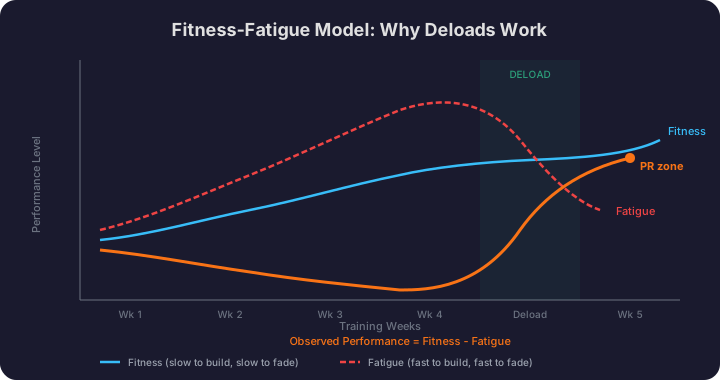
Training performance is determined by two competing forces:
- Fitness — your accumulated training adaptations (muscle, strength, skill)
- Fatigue — the accumulated stress that temporarily suppresses your performance
Both build up as you train hard. But fatigue builds faster and dissipates faster than fitness. A deload drops your fatigue while preserving your fitness — and when fatigue clears, your true fitness level is revealed.
This is why many lifters hit personal records in the week after a deload. They didn't suddenly get stronger in a week of easy training — they just removed the fatigue that was masking their strength.
When to Deload
There are two approaches:
Planned Deloads Schedule a deload every 4-8 weeks, depending on your training intensity and experience level. Beginners can usually go 6-8 weeks. Advanced lifters pushing heavy loads often need one every 3-4 weeks.
Reactive Deloads Take a deload when your body signals it needs one:
- Strength plateaus or regressions across multiple sessions
- Persistent joint soreness that doesn't resolve with normal rest
- Poor sleep quality despite good sleep habits
- Decreased motivation or mental fatigue toward training
- Elevated resting heart rate
The best approach is usually a combination: plan deloads into your program, but be willing to take one earlier if the signs appear.
How to Structure a Deload
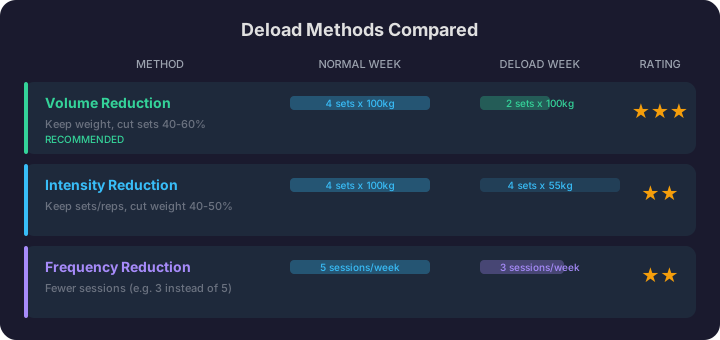
The most common and effective approach is to reduce volume while keeping intensity moderate:
Volume Reduction (Recommended)
- Keep the same exercises and weights
- Cut total sets by 40-60% (if you normally do 4 sets, do 2)
- Keep reps the same — just fewer sets
- This maintains the movement patterns and neuromuscular connections while dramatically reducing total stress
Intensity Reduction
- Keep the same number of sets and reps
- Reduce weight by 40-50%
- Less effective for maintaining strength adaptations, but easier psychologically for some people
Frequency Reduction
- Train fewer days (e.g., 3 sessions instead of 5)
- Keep the sessions you do at normal intensity
- Good if your recovery issue is primarily about total weekly stress
The volume reduction method works best for most people because it preserves the stimulus quality while cutting the fatigue-generating quantity.
What NOT to Do During a Deload
Don't skip the gym entirely. Complete rest for a week can lead to detraining effects and makes it harder to return to your normal program. Active recovery is better than passive recovery.
Don't try new exercises. A deload isn't the time to experiment. Novel movements create their own recovery demands. Stick to your normal exercises at reduced volume.
Don't add cardio to "make up" for lighter lifting. The point is less total stress, not the same stress from different sources. If you do cardio during a deload, keep it light — walking, easy cycling.
Don't feel guilty. This is the hardest part for many lifters. A deload is not laziness — it's a strategic investment in your long-term progress. The strongest athletes in the world all deload regularly.
Deloads in Your HyperBody Program
HyperBody's smart coaching programs build deloads into the periodization structure automatically. Your training blocks are designed with progressive overload phases followed by recovery phases, ensuring you're accumulating fitness without drowning in fatigue.
When your program schedules a deload week, trust the process. You'll come back stronger.
The Bottom Line
Training hard is important. But training smart means knowing when to pull back. A well-timed deload clears accumulated fatigue, reduces injury risk, refreshes motivation, and sets you up for your next phase of progress.
If you've been grinding for months without a break and wondering why progress has stalled — the answer might not be training harder. It might be training less, for just one week, so your body can finally catch up.